

As electric cars become more and more prevalent, it seems very obvious that the future is going to be all-electric. The European Union aims to have 30 million electric cars on the road by 2030. In fact, in the UK there is a national mandate that 50% of all new cars sold by 2025 must be all electric. This is quite incredible considering the world’s flagship electric company, Tesla, is only 18 years old.

However, it seems that Europeans are generally more open to electric cars, and are faster at adopting the electric movement than Americans. Why is this? Are we more stubborn? Is there a financial reason? The largest cause is quite simple. Americans drive more, and have a stronger reliance on the automobile for travel and transport.
In general, America does not have a great public transport system, and so our primary means of transportation is by the motor vehicle. The population density of the United States is far less than that of any country within the European Union, and as a result, there is less infrastructure in place in the United States for people to travel by means other than the automobile.
A couple years ago, I was in Germany traveling through the countryside. I was amazed not only by the main regional train lines that cut through the country, but also by the smaller network that supported these bigger lines. As soon as we got off the train from Stuttgart to Munich, we hopped on a smaller, local train line that took us out of the city to our destination. We never ended up walking very far because the train networks reached to the farthest corners of the country.
Alternatively in the United States we struggle to develop train networks, not because we can’t build large lines going from big cities such as New York to Los Angeles, but because state and local governments don’t to spend large investments in local networks. Hence, we rely so much on the car. If you live in Europe, you don’t have very far to travel, even on a daily commute. So for most Europeans, an electric car with only a hundred or two hundred miles of range works perfectly well. But as Americans, we tend to get anxious if a car doesn’t have significant range. We consider the possibility of traveling across the country and don’t yet feel comfortable spending a lot of time waiting for cars to charge at charging stations.
It is therefore this “range anxiety” that causes hesitation in American buyers. It is not so much of a concern anymore that electric cars are expensive. Tesla’s Model 3 paved the way for relatively cheap electric cars in the market. However, we worry that if we only have 200 miles of range in an electric car, we won’t be able to travel more than a few hours without getting range anxiety or waiting for a long time at a charging station.

If we compare them side-by-side, Europe is much more capable of entirely eliminating the automobile than Americans. Our reliance on the automobile is why we worry so much about electric cars and their extensive range. If necessary, anybody can take their gas-powered car, fill it up, and make a long-haul across the country in what is a relatively short amount of time. When we think about taking the time to charge electric cars at frequent stops along the way, we favor gas and hybrid cars out of anxiety and uncertainty.
The challenge for Americans therefore this: Can we give Americans more peace of mind that an average electric car will give them the range they need? This problem is not simply tackled by a clever marketing team. Instead, it is a mindset change that will have to take place over the course of several years. If we can get over our fears of being abandoned on the side of the road by our electric car when it runs out of battery, then maybe we will start trusting our EVs to take us long distances. I think this is why there is such potential in the American market. Over the next several years, more and more people will start to trust electric vehicles. We are slowly transitioning from the early adopter stage to the mass-market stage. This problem also opens new product opportunities for range-extending products such as roadside solar chargers and emergency battery packs.

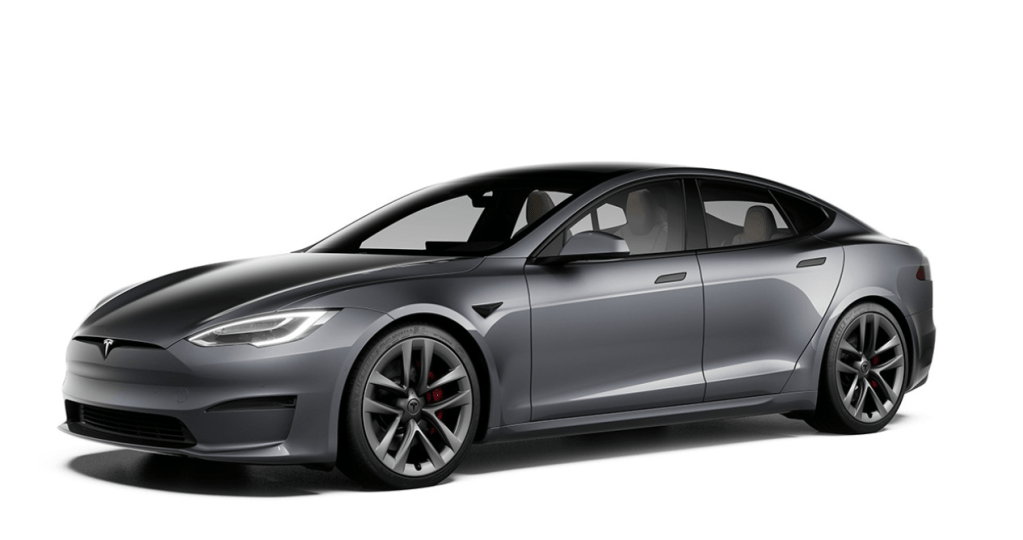
Here is another consideration: Tesla has announced their newest model, the Tesla Model S Plaid+. When delivered in mid-2022, this new variant of the Model S will give consumers over 520 miles of range! Even if you are driving in a state where the speed limit is 80 miles per hour, that adds up to a total of 6 1/2 hours of driving! Even for most Americans that is an astonishingly long drive. If you were to double that and drive 13 hours in one day, I would imagine that you would want to stop for about an hour to get some lunch and stretch your legs. Surely you will want to give the car a break just as much as your own body, which would allow a recharge time that does not wildly inconvenience a traveler. At this point, does having a longer range than 520 miles make sense? At a certain point, the human body reaches a drive time limit. Once we reach that limit, there is nothing that motivates us to build cars with an even longer range. From there, the goal will simply be to make these cars more inexpensive and longer-lasting.
If you are also an American and you suffer from range anxiety, feel free to check out my article on how much range Americans actually need in an electric car. What are your thoughts? Where’s the range plateau going to be? Let me know what you think!
 Driver Mentality
A good post on Americans and electric cars. Thank you 😊
LikeLiked by 1 person